Warpato
Warpato borrows its name from one of 3D printing's most stubborn defects - warping, the slight curl that happens when plastic cools unevenly and lifts from the bed. It's a failure that reveals something true: materials have memory, and they resist being forced into shapes that ignore it.
That tension is the starting point for everything Warpato makes.
The project is an exploration of furniture and objects designed around three fixed constraints: style, manufacturing method, and environmental impact. Not as a checklist, but as a single discipline. The way something is made should be visible in what it becomes. The materials should be honest about where they come from and where they'll go.
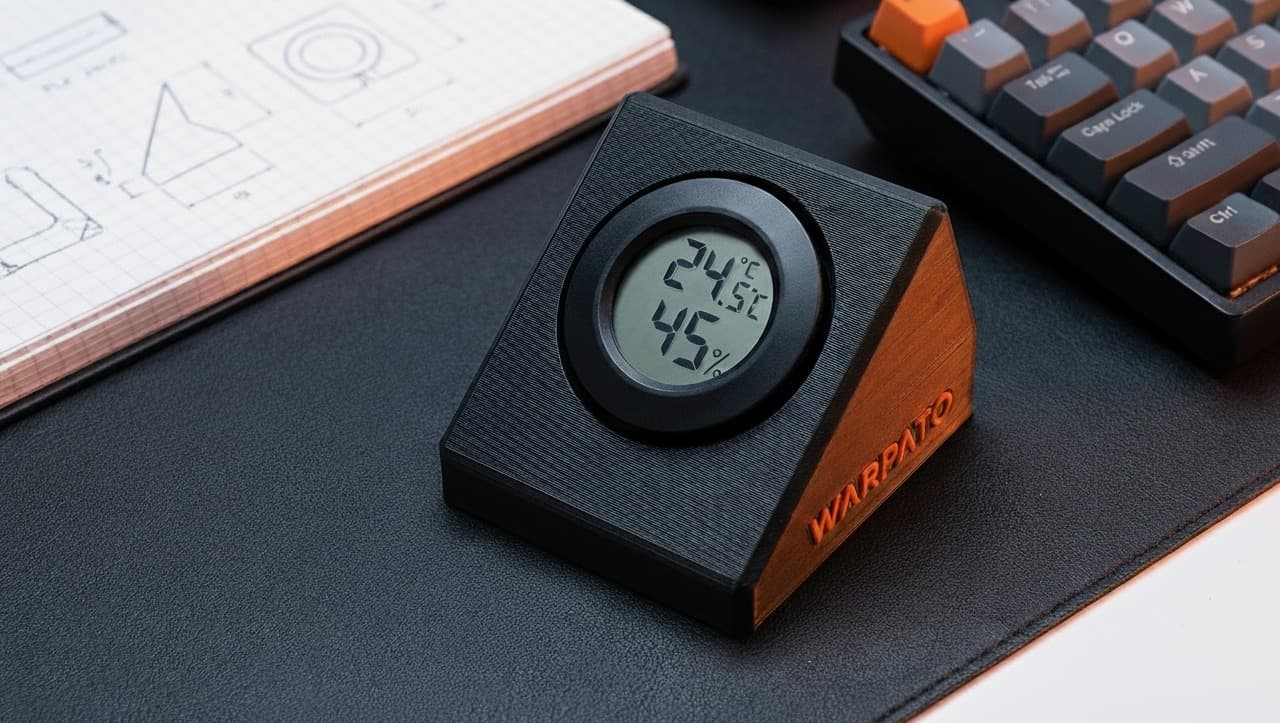
Most designed objects hide their making. Injection-molded surfaces are smooth and featureless; joints are buried; the grain of a material is treated as noise to be erased. Warpato works in the opposite direction - the manufacturing logic becomes the aesthetic logic. Layer lines, fold radii, weld points, the natural variation of reclaimed stock: these aren't flaws to conceal, they're the signature of how the object exists in the world.
The logo picks up the same idea. It recalls the warped corner of a misprint - geometry that should be flat, pushed out of plane by forces the process couldn't fully control. It's a mark that remembers its own making.
The environmental constraint isn't a virtue signal. It's a design brief. Choosing a material or a process because it's lighter on the planet narrows the solution space in productive ways. It rules out the lazy options. It pushes toward things that are repairable, that use less, that age well rather than degrade.
Warpato is still in its early form - closer to a direction than a catalogue. The first pieces will define what the language actually is: what it feels like to sit in, to use, to live with. The constraint is the work.